New Book to celebrate International Day of Peace
When the Sun enters the Capricorn zodiac
Celebration of the harvest festival across India brings a renewed energy and a time to execute new plans. This post shares the connection of the Chandra Kala saree and offers preventive conservation tips for fabric display.
Kiran Java
1/14/20263 min read
The sun (Surya) moves out of the shadows of Sagittarius and enters the highly disciplined zodiac sign of Capricorn. This transition is Makar Sankranti, a season of renewed spirit and a time to execute new plans.
Makar Sankranti thus observes a new beginning and across India, this harvest festival is known by various names. In the Mahabharata it is known as Magh Mela. Bound sweets of jaggry and sesame seeds are exchanged.
Different parts of India have their own special ways to celebrate Makar Sankranti. In Gujarat the festival is known as Uttarayana and kite flying is a way of celebrating.
In Maharashtra, small clay pots filled with rice, sugarcane, berries, etc are offered to the presiding deity but also exchanged amongst women as a gift. These are called Sugad.
Newly married women wear the 'chandra kala' saree. This is a black handloom woven saree with tiny mirrors embroidered on the body to look like the night sky. Some of these are adorned with the Kasuti embroidery of Karnataka.
At the Raja Dinkar Kelkar Museum in Pune, a beautiful specimen of the Chandra Kala saree is carefully displayed in their Textile gallery. This has been gifted to the museum by Smt. Ahilya Kirloskar, Pune.
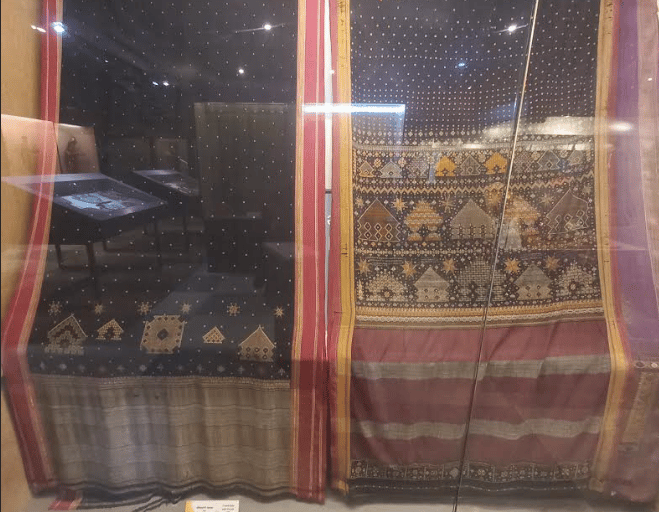
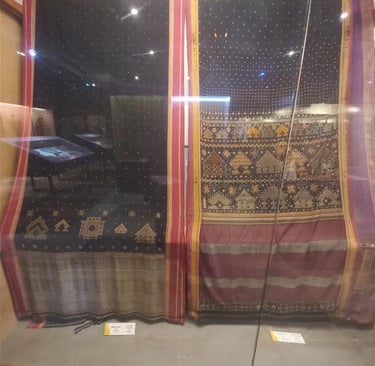
Brocade Handloom Chandra kala to celebrate Makar Sankranti
Courtesy: Raja Dinkar Kelkar Museum, Pune
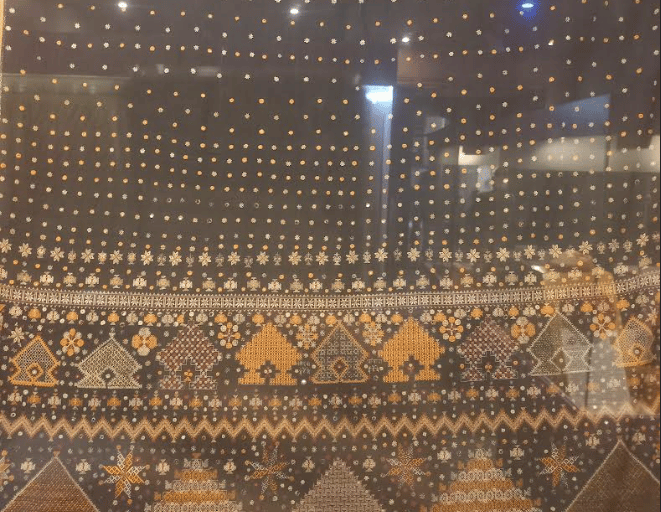
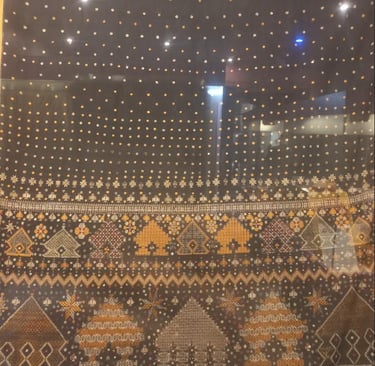
Embroidered tiny mirrors with Kasuti embroidery
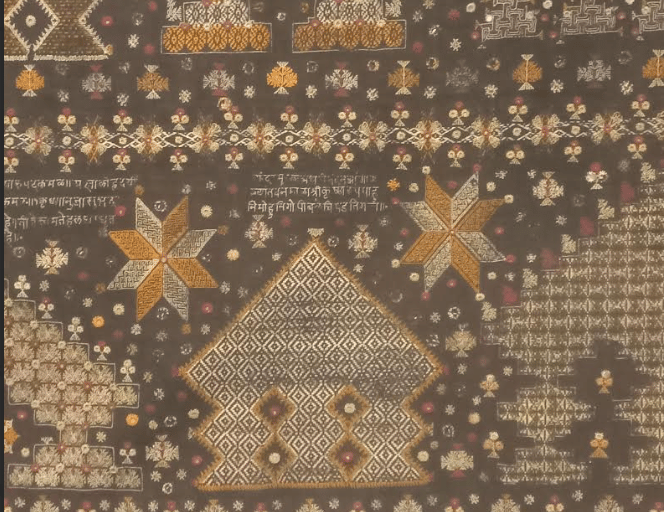
Can you spot the Sanskrit Shlokas embroidered on the saree?
Preservation Tips:
Textiles are sensitive to light. They should be displayed away from sunlight in a low lux value of 50 Lux otherwise there is fear of photo-oxidation. Try to have UV filters on the lights when on display. Textiles should be mounted on a padded backing to avoid stress to the fibers. If the textile is folded it weakness the fibre along the fold area and can tear. Every couple of months it should be re-folded to avoid damage. If possible try to roll long textiles on a pole to increase their longevity. Pure fabrics are susceptible to insect damage and it is best to have adequate pest control measures in place. Try to rotate objects as much as possible so that they can be stored in a dark area away from the damage of light.
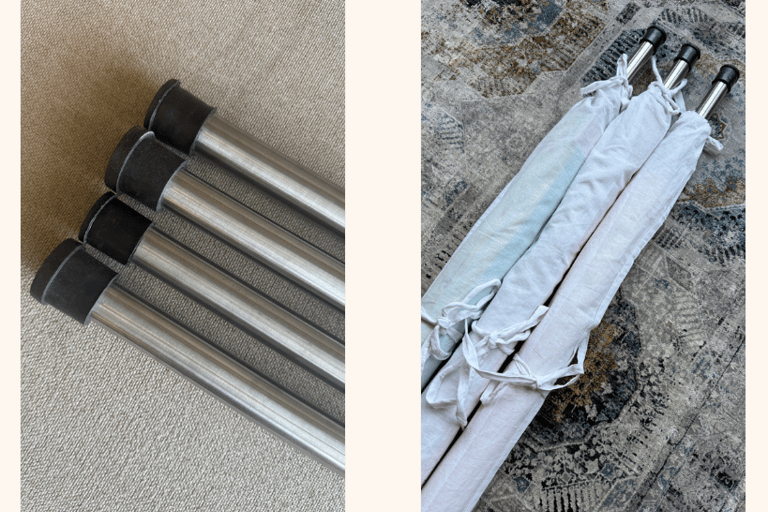
Mruga Kirloskar offers these Sari Storage rods at her Studio Paithanis by Mruga Kirloskar in Aundh, Pune. These allow the fabric to be stores crease free adding to its longevity. The fabric is then covered with a fine muslin cover and tied in place.
Pic courtesy: https://paithanisbymrugakirloskar.com/
About the Author:
Kiran Java has participated in the Preventive Conservation of Paintings workshop by the Indian National Trust for Art and Heritage (INTACH) in 2025 and is currently studying Preventive Conservation at the Bhandarkar Oriental Research Institute. She is a member of both the Indian Association for the Study of Conservation of Cultural Property (IASC) and Museum Association of India (MAI). With a Masters degree in Mass Communication and Journalism, Kiran is skilled at sharing complex preservation conservation concepts in an accessible way. She is currently on a mission to write a series of articles to help collectors protect and preserve their cherished collections.